Senior research specialist, Human Sciences Research Council
Disclosure statement
Steven Gordon works for the Human Sciences Research
Council as a senior research specialist. He receives funding from the
Centre of Excellence in Human Development at the University of the
Witswaterand.
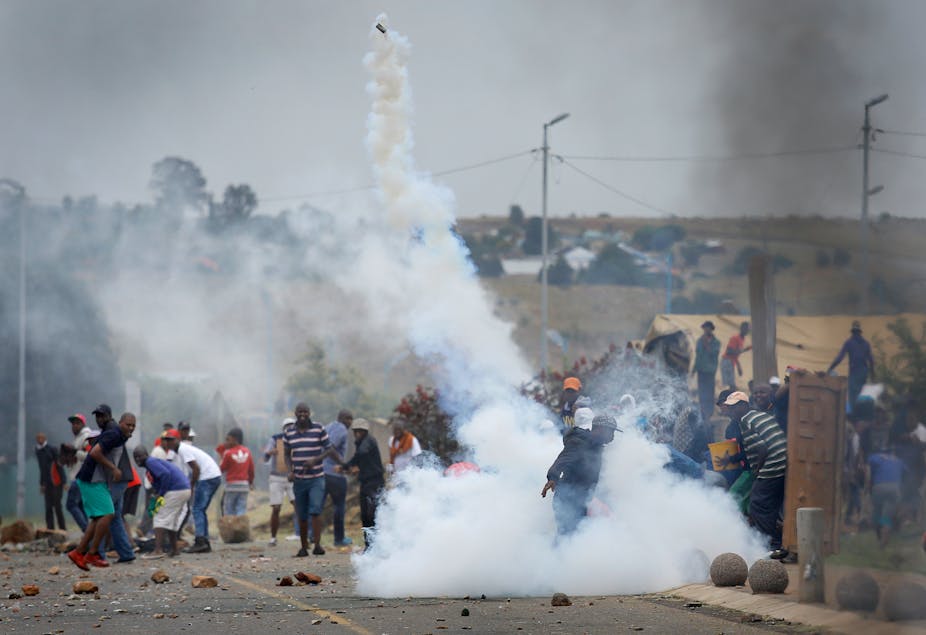
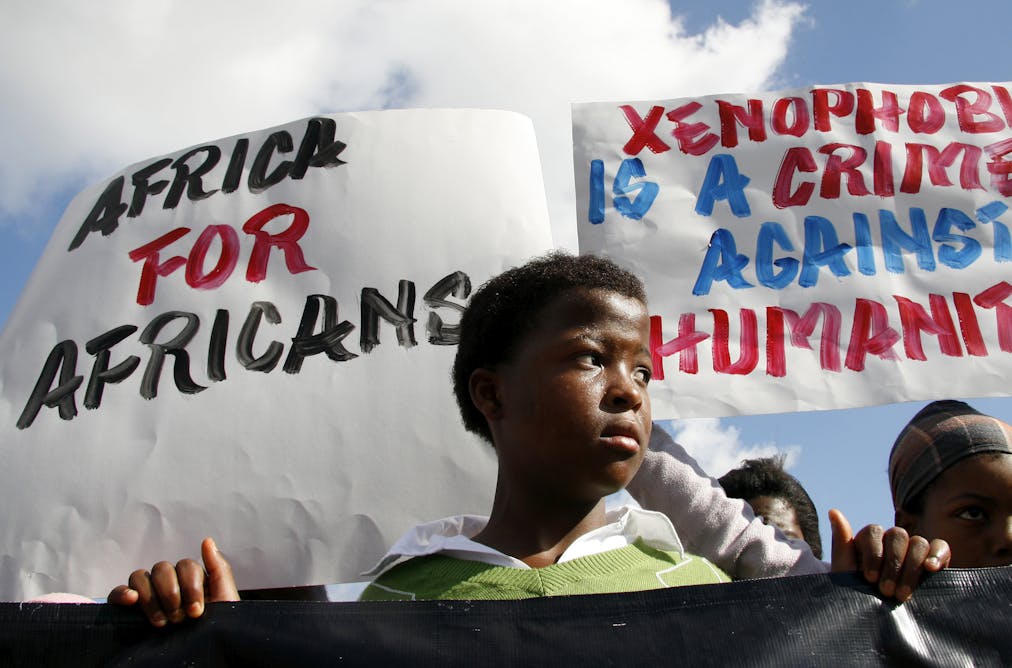
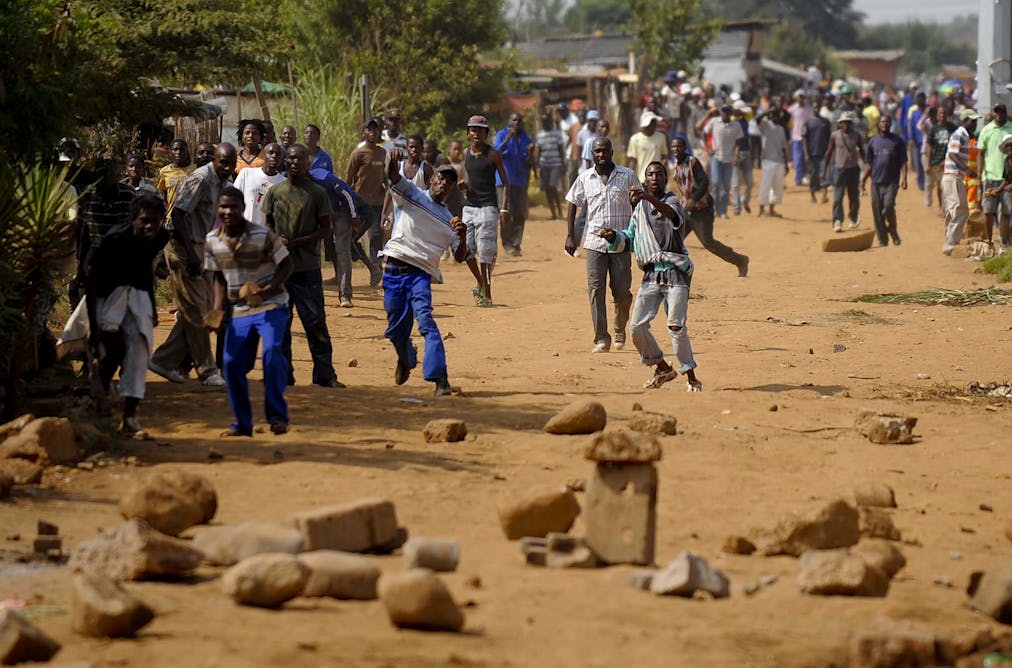
Violence directed against migrants from elsewhere in Africa flares up frequently in South Africa.
Kim Ludbrook/EPA
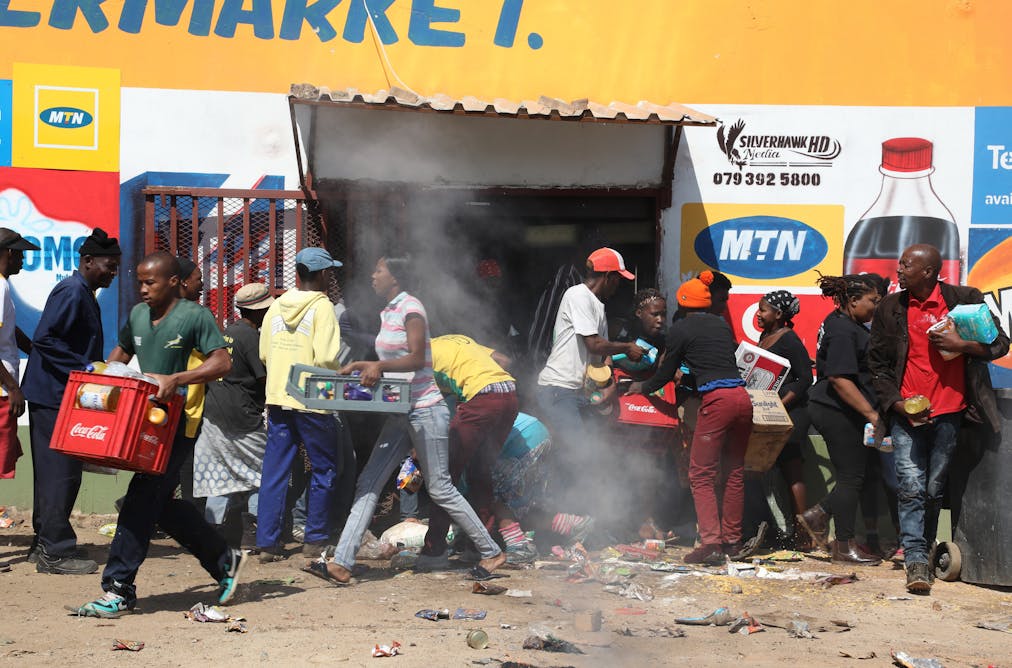
Mobs have attacked foreign-owned businesses
on the streets of at least three South African cities in recent days.
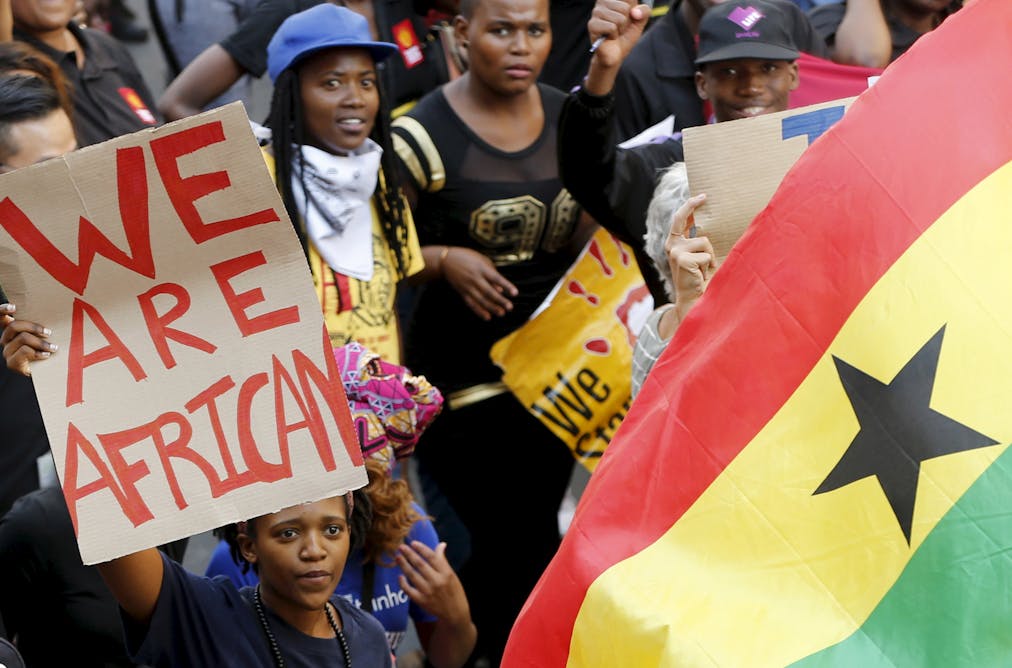
This has caused outrage across Africa. There have even been retaliatory attacks. The South African government, under pressure to protect her large international migrant community, quickly defused the attacks.
Such attacks are not new. For more than two decades, this type of crime has bedeviled the country. There is growing frustration that so little has been done to stop it.
To combat anti-immigrant hate crime, we need to understand its
drivers. Scholars at the Human Sciences Research Council have recently
made new discoveries about the drivers of anti-immigrant hate crime in South Africa.
We found that a significant share of the general population hold anti-immigrant views
and blame foreign nationals for many of the socio-economic challenges
facing South African society. Yet there is little empirical evidence
that immigrants are driving problems like crime or unemployment.
But beliefs about the role played by foreign nationals in the country
clearly influence how people think about anti-immigrant hate crime. Anti-immigrant statements by politicians also feed into the problem.
Tracking anti-immigrant hate crime
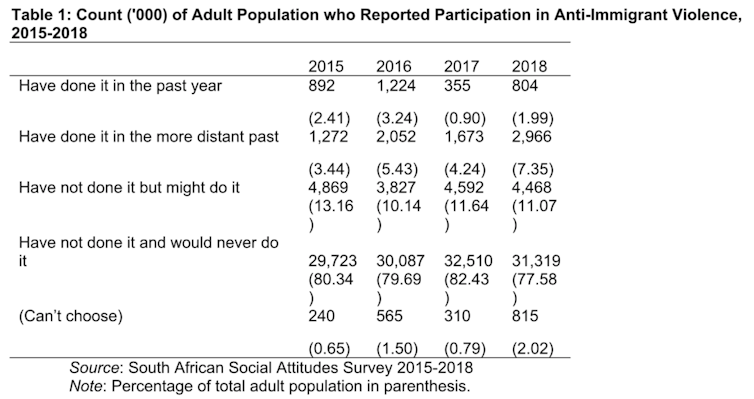
Data from the South African Social Attitudes Survey,
conducted annually since 2003, was used. The survey series consists of
nationally representative, repeated cross-sectional surveys. It is
designed as a time series and is increasingly providing a unique,
long-term account of the speed and direction of change of public
participation in anti-immigrant behaviour in contemporary South Africa.
Using this data, researchers have found that anti-immigrant hate crime is more widespread than previously thought.
Beginning in 2015, the following item was added in the survey questionnaire:
Have you taken part in violent action to prevent immigrants from living or working in your neighbourhood?
People may be disinclined to disclose this type of potentially
incriminating information during face-to-face interviews. But community
research suggests that the stigma attached to participation in
xenophobic activities may not be as great as we may imagine.
Still, the reader should be aware of this possible under-reporting of
anti-immigrant behaviour when reviewing the survey’s results.
A minority of the South African adult population reported that they
had participated in this form of anti-immigrant aggression. The share of
the general public who admitted engaging in violence fluctuated within a
very narrow band over the period 2015-2018. This shows the willingness
of survey participants to respond to this question varies by only a
small margin between the two periods. It also suggests a linear
relationship between behavioural intention and attitudes.
The survey results demonstrate the ugly reality of violent
anti-immigrant hate crime in South Africa. Although this is an important
and dangerous type of prejudice, such crime is not the only form that
xenophobia may take. Other forms of peaceful anti-immigrant discrimination are also evident in South African society.
Research has shown that more peaceful forms of anti-immigrant activities are often the first step
in a process of escalation that leads to xenophobic violence. Past
participation in peaceful anti-immigrant activity (such as
demonstrations) was found to be a major determinant of this type of
violence.
For this reason, we suggest in our study,
policymakers should consider non-violent anti-immigrant activities as
early warning signs of forthcoming anti-immigrant hate crime.
Conclusion
One of the most troubling findings to have emerged concerned possible
participation in anti-immigrant aggression among those who had not
taken part before. More than one in ten adults living in South Africa
reported in the 2018 survey that they had not taken part in violent
action against foreign nationals – but would be prepared to do so.
This finding is quite disturbing given that there may be
under-reporting of the propensity for violent action. Anti-immigrant
stereotypes were shown to be a robust driver
of this kind of behavioural intention. This suggests that
anti-immigrant attitudes could have a mobilising effect, spurring
individuals towards acts of violent xenophobia.
The results of this study show that millions of ordinary South
Africans are prepared to engage in anti-immigrant behaviour. So it is
vital that the resources dedicated to combating xenophobia be equal to
the size of the problem.
The South African government has a national action plan
to combat racism, racial discrimination, xenophobia and related
intolerance. The progressive measures put forward in the plan include
immigrant integration, better law enforcement, civic education and
increased immigrant access to constitutionally entitled rights.
Recent research suggests
that many of these measures have a degree of public support. The plan
was approved in March this year. If it’s to work, it requires adequate
resources and support from all sectors of South African society.
Instead of focusing on short-term solutions civil society, foreign
governments and the general public must work with the state to
progressively implement this plan.
The
Conversation aims to rebuild trust in experts and promote more informed
public debate. Our independent fact-based journalism is essential for a
healthy democracy. Your support enables us to keep our content free and
accessible.