Human trials of new antimalarial drugs are in the pipeline after
Kenyan scientists successfully used bacteria to kill the parasite that
causes the disease.
The Kenya
Medical Research Institute (Kemri) and global health partners say the
breakthrough could potentially lead to the development of a new class of
drugs in less than two years.
The promise of a new treatment comes after trials in Burkina Faso
proved that Ivermectin, a conventional drug used for parasitic diseases
including river blindness and elephantiasis, reduced transmission
rates. The medication worked by making the blood of people who were
repeatedly vaccinated lethal to mosquitoes.
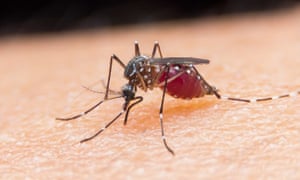
The study also found that Ivermectin can kill plasmodium falciparum,the malaria parasite carried by female mosquitoes, when administered to humans.
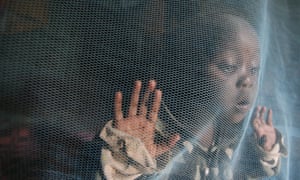
Malaria affects more than 200 million people globally and
claims nearly 500,000 lives a year, with children especially
vulnerable. Photograph: University of Glasgow/PA
The US-based Centers for Disease Control and Prevention will now
perform human trials using new drugs derived from the bacteria after
extensive lab research.
Advertisement
The initiative was prompted by studies
conducted by the World Health Organization and several international
health agencies warning of resistance to existing antimalarial drugs.
“Resistance is always a problem and the parasite always finds a way
to get away with it. That is why a new line of treatment is a must. It
has to be made available soon,” said Dr Simon Kariuki, head of Kenya’s
malaria research programmes at Kemri.
The research is being conducted in Kenya by local scientists in collaboration with international health experts.
“We have discovered [that the] bacterium is highly effective in killing plasmodium falciparum,
the parasite that causes malaria, but our research is more focused on
pregnant women and children as they are more vulnerable. We are getting
very motivating leads,” Kariuki said.
“In a few years, new malaria drugs could be in the market if the
current research findings are to go by. The same bacteria known to kill
dangerous pathogens in scabies, river blindness, can also be applied in
malaria.
“The motivating success of Ivermectin is leading us to venture into
producing other drugs. That is very encouraging and it means more
research, and that is what we are doing.”
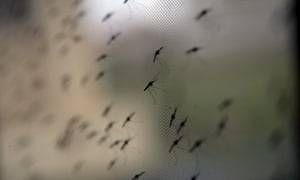
Mosquitoes are seen on a net at a research facility in Nairobi, Kenya. Photograph: Stephen Morrison/EPA
Child malaria episodes could be reduced by up to 20% if populations
living in high-risk areas are given Ivermectin, according to a study published by the Yale School of Public Health.
Advertisement
Kenya’s
health ministry says malaria cases have gone up from 16,000 in 2016 to
about 18,757 last year, and experts warn that the climate crisis could
make matters worse.
“Future drug trials of women and children are planned … and obviously
with the highest safety standards. We need more answers on Ivermectin.
We need new malaria drugs as soon as possible as drug resistance is not
something to ignore and we have to treat the situation as urgent,” said
Kariuki.
An expert, independent from the study, said reports of resistance to the current class of malaria drugs are on the rise.
“There have been confirmed reports by the World Health
Organization that there have been cases of resistance in Thailand and
Cambodia, and closer to home in the Democratic Republic of the Congo,”
said Dr Evans Murage, a pharmacist based in Nairobi, Kenya.
“There are cases of the drugs being sold over the counter, leading to
their resistance and overuse. Many people who buy drugs from pharmacies
suspect they have malaria even without getting tested. This should be a
worry for the government.”
Currently, the most effective vaccine to have a protective effect against malaria is RTS,S, introduced in a WHO-recommended pilot scheme in 2019. In trials it was found to prevent approximately 39% of cases of malaria in children aged from five to 17 months.








No comments:
Post a Comment