Modern society relies on metals like copper, gold and nickel for
uses ranging from medicine to electronics. Most of these elements are
rare in Earth’s crust, so mining them requires displacing vast volumes
of dirt and rock. Hard rock mining – so called because it refers to
excavating hard minerals, not softer materials like coal or tar sands –
generated US$600 billion in revenues worldwide in 2017.
I study human-altered landscapes, including areas impacted by mines.
Mining operations are major water pollution sources and can cause
problems that persist for generations. Their global footprints also
directly reshape significant portions of Earth’s topography, leaving
indelible evidence of human presence.
The proposed Pebble Mine in Alaska sits at the headwaters of Bristol Bay, the world’s largest commercial sockeye salmon fishery.
Digging deep and wide
In most locations, concentrations of copper, gold and other elements
are too low to be extracted profitably. But in some spots they occur in
seams of mineable, high-concentration minerals called ores. The
economically viable concentration of a mineral depends largely on its
market price. Gold ore can be viable at concentrations as low as
0.0001%, while copper becomes uneconomic below 0.5%.
To reach these deposits underground, miners tunnel, dig open pits or
scrape through the Earth’s surface. The choice of technique depends on
factors including how consolidated the ore is, the geologic setting and
the depth of the ore.
Deep mines disturb the smallest amount of surface land, but are
inherently more dangerous for miners. Far below the Earth’s surface,
crews constantly risk encountering toxic gas fumes or stale air with no
life-giving oxygen. Other dangers include earthquakes and equipment
failures. In 2010, 33 Chilean miners spent over two months trapped underground in a copper-gold mine after a ramp collapsed, but ultimately were rescued.
Growing international emphasis on mine safety and changes in
technology and ore quality have prompted a shift from deep mining to pit
mines or surface mines, which access ores from the open air. Pit mines
can be up to three-quarters of a mile deep, but typically cover less
than 20 square miles. In contrast, surface mines typically extend less
than 1,000 feet into the Earth’s crust, but can extend over hundreds of
square miles.
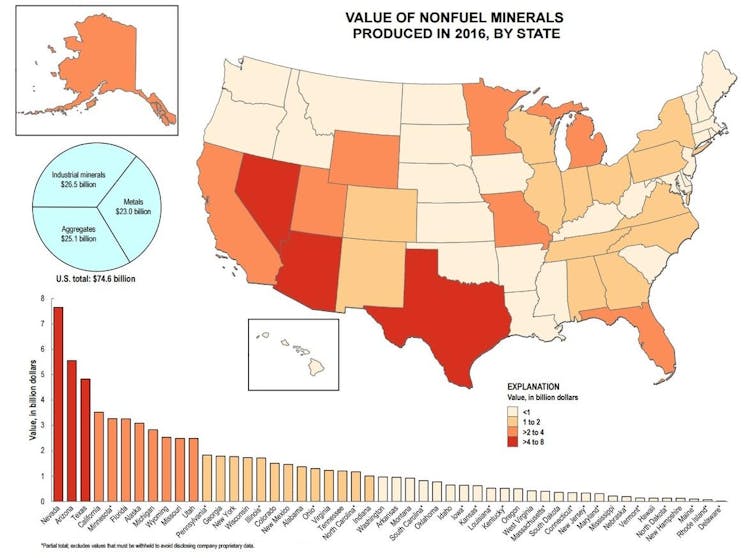
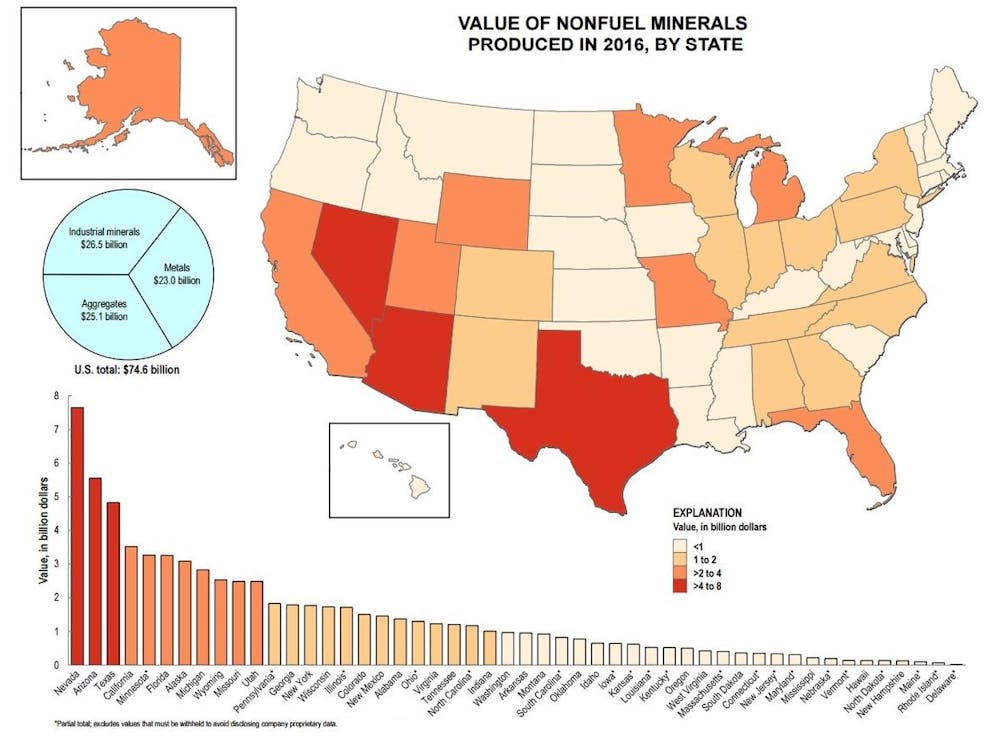
Along with metals such as gold,
silver and iron, mines also produce materials including sand and gravel,
crushed stone and Portland cement.USGS
Acidic waters
Accessing ore typically involves blowing apart bedrock, removing it
from the shaft or pit and storing waste materials nearby after
extracting the ore. In these heaps of loose rock, known as spoil piles,
previously buried raw minerals are exposed to air or water. Sulfur-rich
compounds in the rock react with oxygen and water, producing sulfuric
acid, which can lower the pH of nearby streams to levels comparable to
lemon juice or vinegar.
At its worst this process, known as acid mine drainage,
can kill most native aquatic life. If acid drainage reaches
groundwater, it may persist for decades or centuries and start a cascade
of other impacts that impair water quality throughout local river
networks.
When acid mine drainage lowers a stream’s pH, other metals can also
start to melt out of minerals in spoil piles, mine shafts or adjacent
soils, leaching into soil and groundwater that intersects these areas.
This creates waters with increased levels of cadmium, copper, lead and
other heavy metals, which are harmful to aquatic insects, fish and human
health.
These effects can be transported far downstream and last for
generations. Old and abandoned mines around the world have harmed water
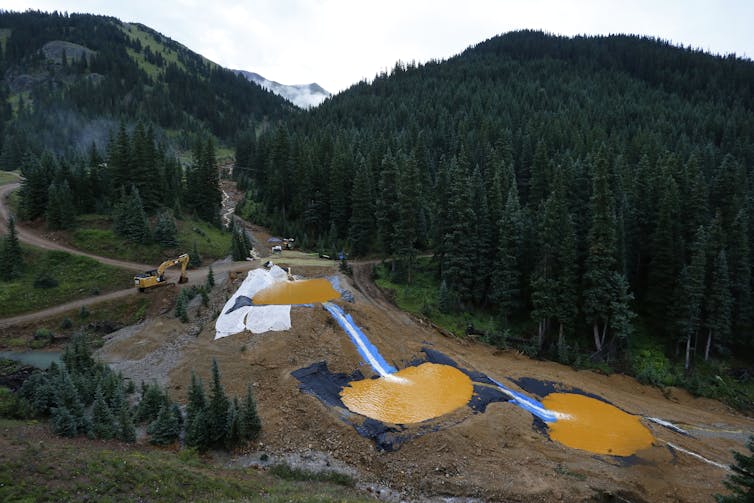
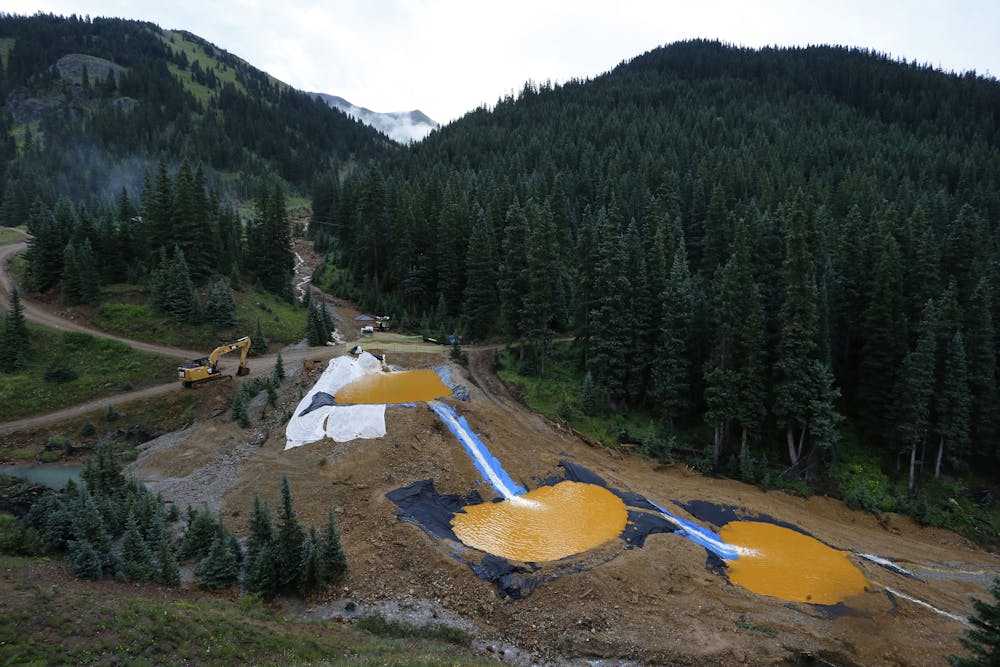
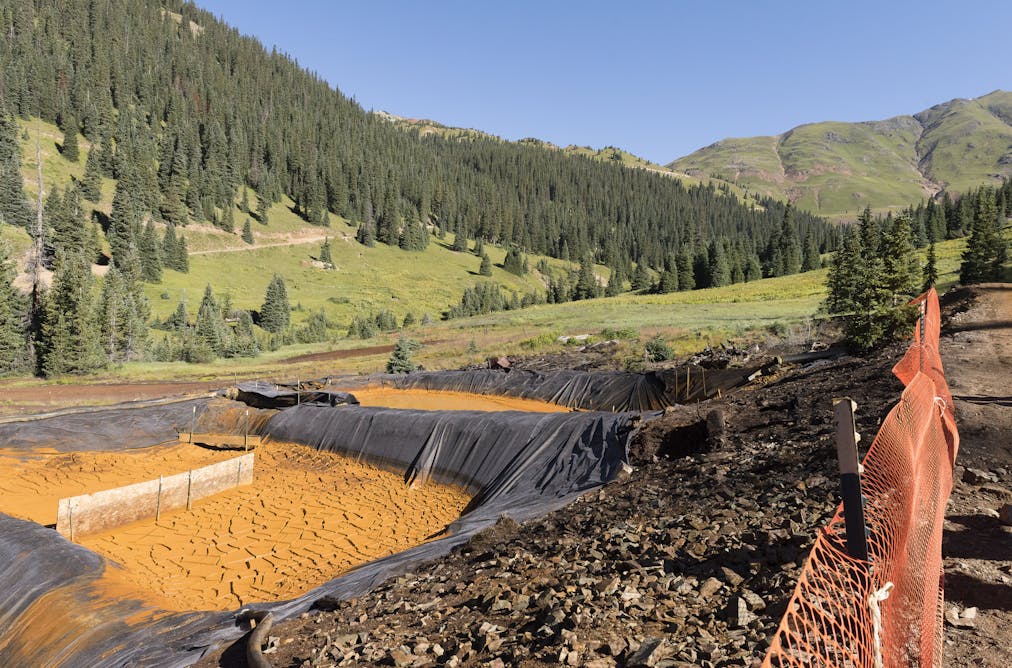
quality long after mining has ceased. Their impacts can come as long-term slow leakage, or as sudden discharges like the 2015 Gold King spill near Silverton, Colorado, which released three million gallons of mine wastewater and debris into the Animas River.
According to the U.S. Government Accountability Office, there are at least 161,000 abandoned hardrock mining sites
in the U.S. West and Alaska. Of these, at least 33,000 have
contaminated water supplies or left piles of mine waste contaminated
with arsenic behind.
Water from the 2015 Gold King mine
spill flows through retention ponds built to contain and filter out
heavy metals and chemicals.AP Photo/Brennan Linsley
Altering the planet’s shape
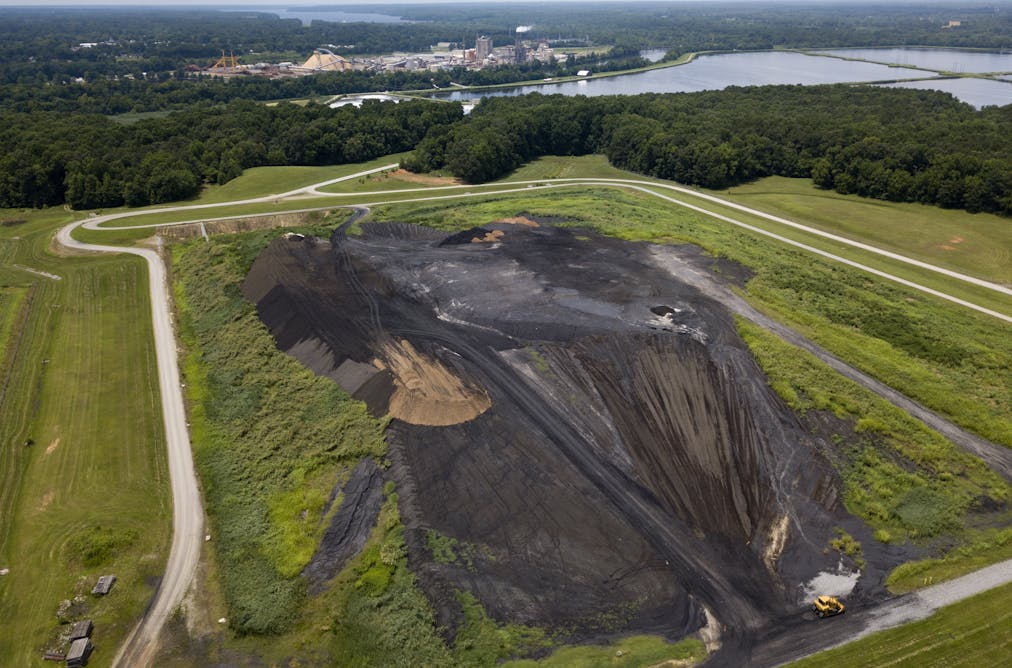
Mining operations have also left thousands of square miles of land altered. In some cases, particularly mountaintop removal mining, entire land forms are permanently reshaped.
For millennia the planet’s surface was configured by the slow geologic
processes of wind and rain. In contrast, mining alters the very geology,
topography, hydrology and ecology of sites within years or decades.
These earth-moving activities represent the kind of effect that has
led many environmental scientists to argue that our planet has entered a
new geologic epoch – the Anthropocene
– where human choices have a greater impact on the Earth than purely
natural processes.
Landscape evolution moves in very slow cycles, so
these topographic and geologic impacts may last far longer than mining’s
effects on water quality. And because geologic processes are slow,
scientists don’t know how these landscapes will diverge or converge in
their future evolution.
Essential and scarce
Like oil and gas producers, mining companies have to contend with the fact that the products they seek are scarce, and easily extractable pools have already been tapped, leading to decreases in ore quality. But demand for these metals continues to grow.
Rapidly expanding green energy will require extracting vast quantities of rare earth metals to power wind turbines, electric vehicle batteries and solar panels. Cellphones, computers, camera lenses and other goods also contain these materials.
Economic imperatives lead companies to continue to push for new mines, either in the U.S. or abroad, where environmental controls may be weaker
And new projects are likely to move more rock, consume more energy and
have longer-lasting impacts than those that preceded them.
Ensuring that mining operations are subject to effective oversight
and long-term monitoring, and that companies are held accountable for
environmental damages, is a long-term challenge wherever mining takes
place. The best way to completely avoid the complications that come from
mining more minerals is to reduce consumption of them, make mining
processes more efficient and make it more economic to recycle industrial
materials and rare earth metals.
The
2020 presidential campaign is expected to feature unprecedented amounts
of disinformation. At The Conversation, we’ll be doing our best to
produce journalism written by experts, based on their research. Your
donation of $5, $50 or $500 will help ensure that this journalism is
distributed, free of charge, where it is needed.