
AMP grabs half share of Macarthur wind farm, still Australia’s biggest
Investment
group AMP Capital has secured a 50 per cent stake in what remains
Australia’s largest operating wind farm, the 420MW Macarthur Wind farm,
in a deal worth $880 million with the Malaysian based utility Malakoff
Corporation.
It’s one of the biggest single acquisition deals for a clean energy project in Australia, and represents a significant windfall profit for the Malaysian company. Other big wind farms are also on the market, including Snowtown 2, owned by Tilt Renewables.
AMP Capital will split the ownership of the 50% stake in Macarthur wind farm between two of its wealth funds, AMP Capital’s Community Infrastructure Fund (CommIF) and the AMP Capital Core Infrastructure Fund.
The
420MW Macarthur Wind farm is located in the south-west of Victoria
being was commissioned in 2013 with 140 turbines and remains the largest
wind farm in the Southern Hemisphere, although it will soon be
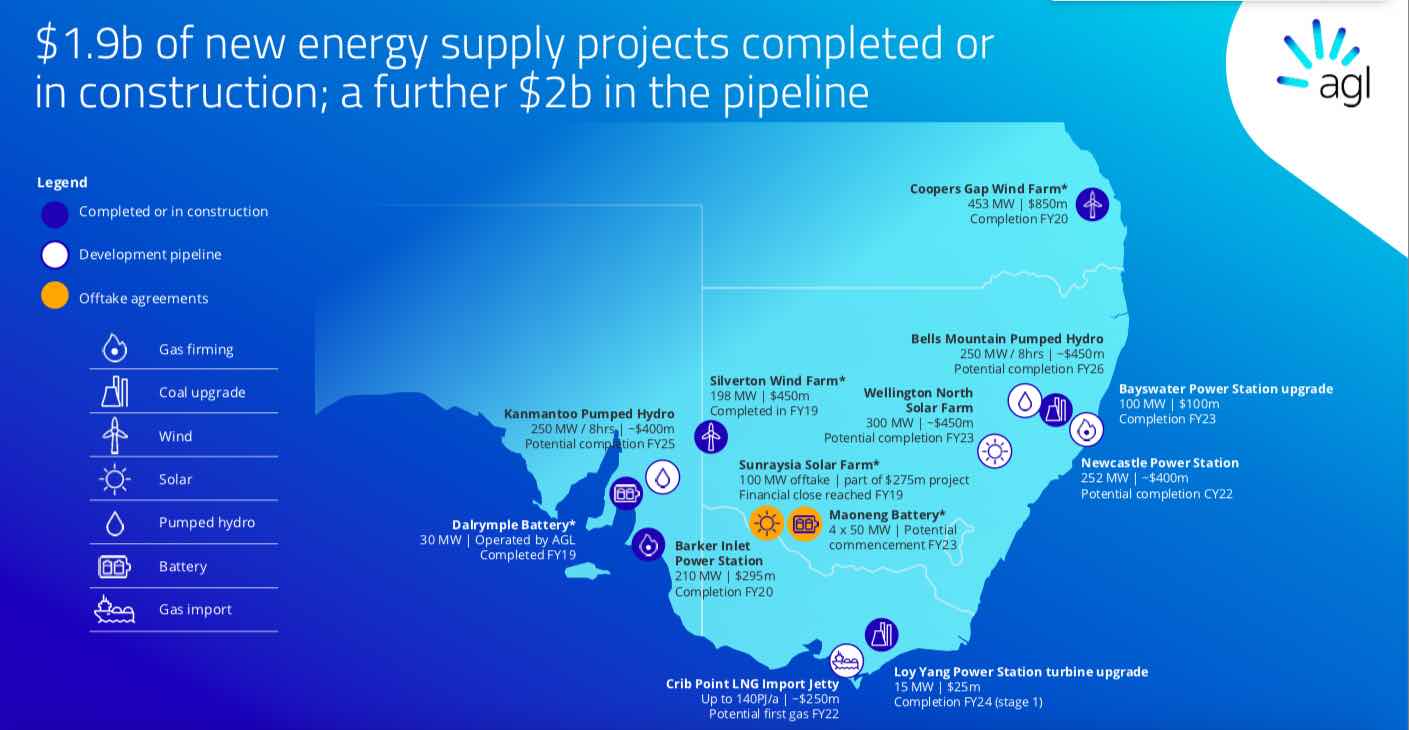
overtaken by the 453MW Cooper’s Gap in Queensland and 530MW Stockyard
Hill in Victoria.
Macarthur wind farm currently sells its generation output to AGL energy under a fixed-price power purchase agreement that will last until 2038. The wind farm produces enough electricity to power around 180,000 homes.
“We’re extremely pleased to have secured this asset for our investors. Macarthur Wind Farm is a unique and high-quality asset that meets CommIF’s objective to produce long-term, stable returns while delivering a positive social impact now and into the future,” AMP Capital Community Infrastructure Fund manager Charles Savage said.
Savage said that the wind farm presented an attractive investment opportunity for the community-focused fund, with the fixed-price power purchase agreement working to reduce the risk profile of the investment.
“The transaction marks CommIF’s first investment in the renewable energy sector. It has an attractive risk profile that provides fixed revenues that are not exposed to price or volume risk. We remain excited by the pipeline of further opportunities in social and community infrastructure projects across Australia and New Zealand in 2020,”
AMP Capital Core Infrastructure Fund manager John Julian echoed this sentiment, with the project adding to the fund’s large infrastructure portfolio.
“Macarthur Wind Farm is a terrific addition to the [Core Infrastructure Fund] portfolio. The fund aims to provide retail investors with both sustainable income and capital growth over the long term – the acquisition is well-aligned to this objective,” Julian added.
The deal represents a significant boost to the valuation of the wind farm, with the $880 million figure significantly exceeding pre-auction valuations of the half-stake of the wind farm, which were floating around $500 million after attracting interest from overseas buyers.
Meridian Energy, which developed the Macarthur wind farm in partnership with AGL Energy at a cost of $1 billion, sold the 50 per cent stake to the Malakoff Corporation in 2013 for A$659 million.
AGL Energy sold its own 50 per cent share in 2015 to Morrison & Co for $532 million.
Malakoff Corporation sought to offload its share in the Macarthur wind farm to free up the invested capital and will use the proceeds to pay down its outstanding debt. Malakoff sought the assistance of Baker McKenzie in 2018 to refinance its investment in the project.
“[The sale] provides an opportunity for Malakoff to unlock the value of its investment in the Macarthur Wind Farm,” Malakoff chief executive officer Datuk Ahmad Fuaad Mohd Kenali said.
“The group will continue to be on the lookout for potential power and water assets within and outside the country,” he added. The estimated gain will immediately help reduce Malakoff’s borrowings.”
Financial close on the deal is expected by the end of March 2020.
It’s one of the biggest single acquisition deals for a clean energy project in Australia, and represents a significant windfall profit for the Malaysian company. Other big wind farms are also on the market, including Snowtown 2, owned by Tilt Renewables.
AMP Capital will split the ownership of the 50% stake in Macarthur wind farm between two of its wealth funds, AMP Capital’s Community Infrastructure Fund (CommIF) and the AMP Capital Core Infrastructure Fund.
Macarthur wind farm currently sells its generation output to AGL energy under a fixed-price power purchase agreement that will last until 2038. The wind farm produces enough electricity to power around 180,000 homes.
“We’re extremely pleased to have secured this asset for our investors. Macarthur Wind Farm is a unique and high-quality asset that meets CommIF’s objective to produce long-term, stable returns while delivering a positive social impact now and into the future,” AMP Capital Community Infrastructure Fund manager Charles Savage said.
Savage said that the wind farm presented an attractive investment opportunity for the community-focused fund, with the fixed-price power purchase agreement working to reduce the risk profile of the investment.
“The transaction marks CommIF’s first investment in the renewable energy sector. It has an attractive risk profile that provides fixed revenues that are not exposed to price or volume risk. We remain excited by the pipeline of further opportunities in social and community infrastructure projects across Australia and New Zealand in 2020,”
AMP Capital Core Infrastructure Fund manager John Julian echoed this sentiment, with the project adding to the fund’s large infrastructure portfolio.
“Macarthur Wind Farm is a terrific addition to the [Core Infrastructure Fund] portfolio. The fund aims to provide retail investors with both sustainable income and capital growth over the long term – the acquisition is well-aligned to this objective,” Julian added.
The deal represents a significant boost to the valuation of the wind farm, with the $880 million figure significantly exceeding pre-auction valuations of the half-stake of the wind farm, which were floating around $500 million after attracting interest from overseas buyers.
Meridian Energy, which developed the Macarthur wind farm in partnership with AGL Energy at a cost of $1 billion, sold the 50 per cent stake to the Malakoff Corporation in 2013 for A$659 million.
AGL Energy sold its own 50 per cent share in 2015 to Morrison & Co for $532 million.
Malakoff Corporation sought to offload its share in the Macarthur wind farm to free up the invested capital and will use the proceeds to pay down its outstanding debt. Malakoff sought the assistance of Baker McKenzie in 2018 to refinance its investment in the project.
“[The sale] provides an opportunity for Malakoff to unlock the value of its investment in the Macarthur Wind Farm,” Malakoff chief executive officer Datuk Ahmad Fuaad Mohd Kenali said.
“The group will continue to be on the lookout for potential power and water assets within and outside the country,” he added. The estimated gain will immediately help reduce Malakoff’s borrowings.”
Financial close on the deal is expected by the end of March 2020.

Michael
Mazengarb is a journalist with RenewEconomy, based in Sydney. Before
joining RenewEconomy, Michael worked in the renewable energy sector for
more than a decade.


-
Massive 1.3MW rooftop solar system completed at Cairns DFOby Sophie Vorrath on 31 October 2019 at 12:28 PM
-
Home batteries hit the floor to adapt to Australia’s strict new standardsby Sophie Vorrath on 30 October 2019 at 12:55 PM
-
All eyes on Australia battery market, as home storage becomes a “need”by Sophie Vorrath on 29 October 2019 at 2:32 PM

-
Tesla full self driving price will rise in Australia once Smart Summon is availableby Bridie Schmidt on 31 October 2019 at 1:34 PM
-
Lightyear One solar car sets record for world’s most aerodynamic carby Bridie Schmidt on 30 October 2019 at 1:40 PM
-
Hyundai Kona becomes first EV to undergo crash tests in Australia, earns five starsby Bridie Schmidt on 30 October 2019 at 12:15 PM
We Recommend
Baker McKenzie announces global carbon emissions r...Press Releases
Australia’s world-first wind-solar-battery plant f...Renewables,Solar,Storage,Utilities
South Australia puts energy contract out for tende...Governments,Solar
Highview Power to build UK’s first “liquid air” en...Governments,Storage
Big wind farm and even bigger battery approved for...Governments,Renewables,Storage
Australia’s emerging issue of congestion at electr...Electric Vehicles,Other Good Stuff,Renewables
:quality(85)/https%3A%2F%2Freneweconomy.com.au%2Fwp-content%2Fuploads%2F2016%2F09%2FiStock_91006587_SMALL-300x169.jpg "Baker McKenzie announces global carbon emissions reduction targets")
:quality(85)/https%3A%2F%2Freneweconomy.com.au%2Fwp-content%2Fuploads%2F2018%2F08%2Fkennedy-wind-park-300x169.jpg "Australia’s world-first wind-solar-battery plant faces lengthy commissioning delays")
:quality(85)/https%3A%2F%2Freneweconomy.com.au%2Fwp-content%2Fuploads%2F2017%2F08%2Frsz_dawn-at-solarreserve-crescent-dunes-nevada-300x174.jpg "South Australia puts energy contract out for tender after failure of solar tower")
:quality(85)/https%3A%2F%2Freneweconomy.com.au%2Fwp-content%2Fuploads%2F2019%2F10%2FHighViewPower_CryogenicEnergyStorage_110-300x200.jpg "Highview Power to build UK’s first “liquid air” energy storage facility")
:quality(85)/https%3A%2F%2Freneweconomy.com.au%2Fwp-content%2Fuploads%2F2019%2F10%2Fvideoplaceholder-300x169.jpg "Big wind farm and even bigger battery approved for South Australia")
:quality(85)/https%3A%2F%2Freneweconomy.com.au%2Fwp-content%2Fuploads%2F2019%2F10%2FIMG20191006130955-copy-1600x800-300x150.jpg "Australia’s emerging issue of congestion at electric vehicle charging stations")
 powered by plista








Ask the PV panel owners in California about my first sentence…..