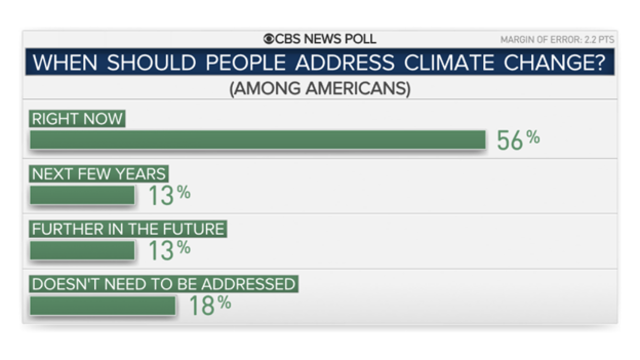
Most Americans say climate change should be addressed now — CBS News poll
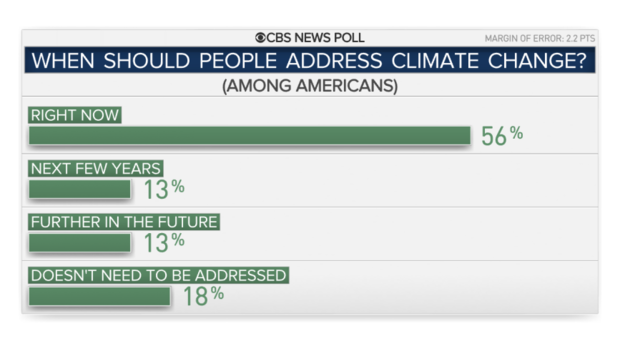
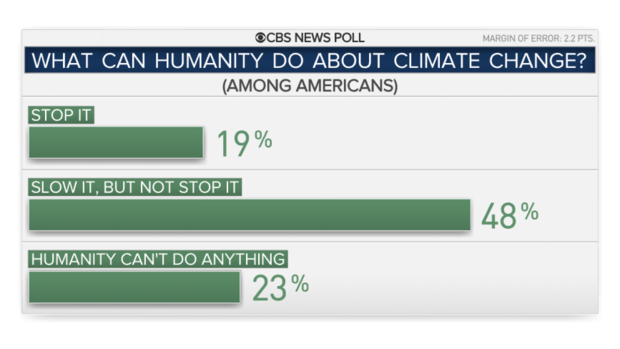
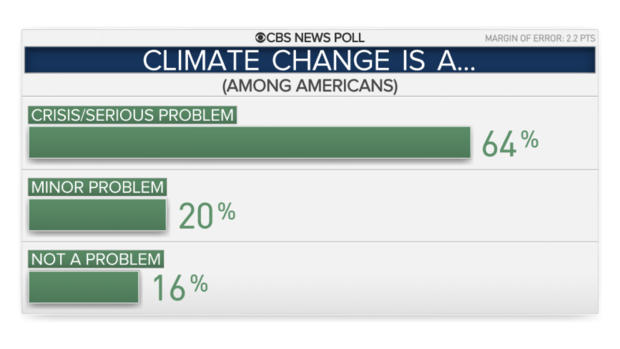
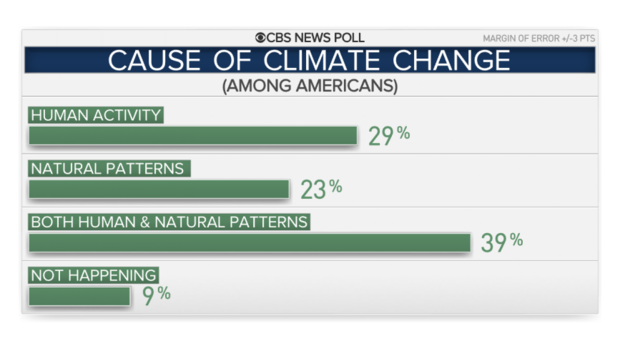
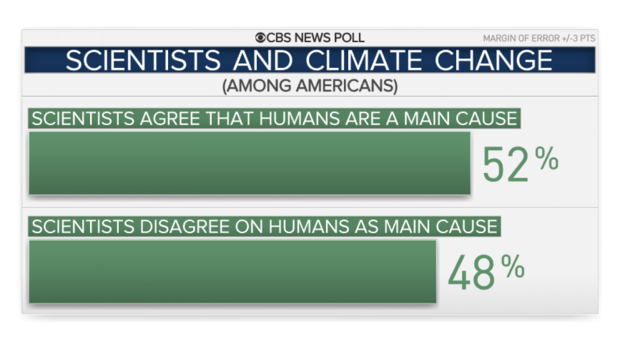
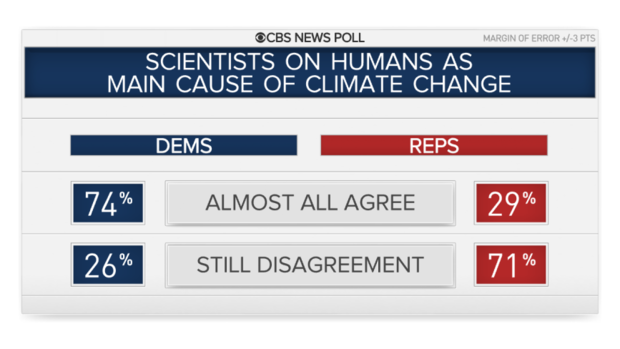
There is also a split in opinions about the consensus of scientific evidence regarding climate change. Fifty-two percent of Americans think almost all climate scientists agree that human activity is a main cause of climate change, while 48% say there is still disagreement among scientists about whether human activity is a main cause.
Political divisions
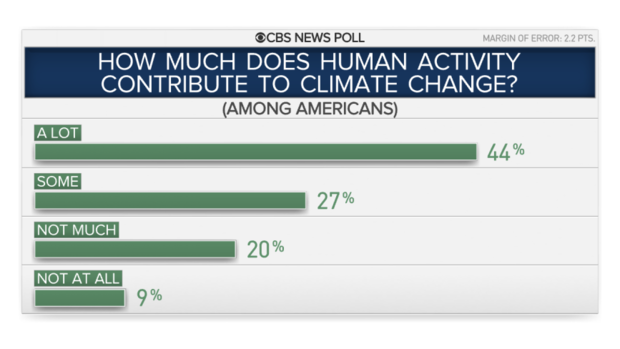
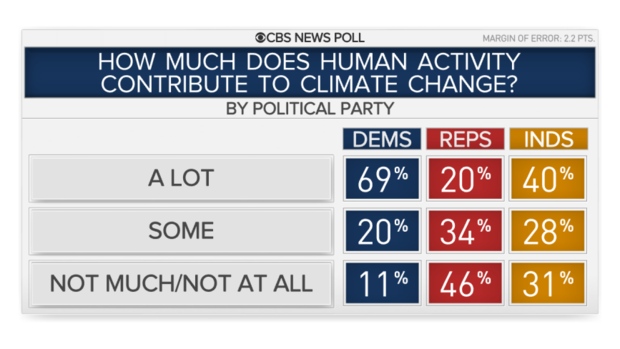
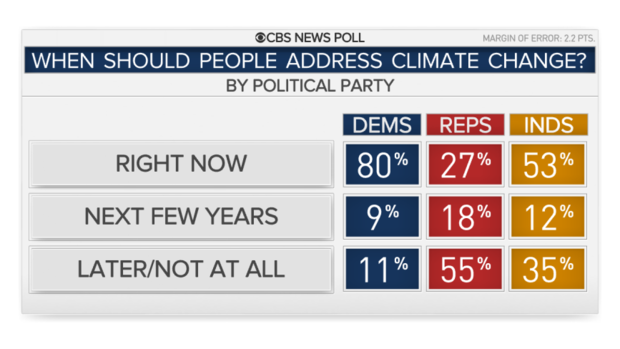
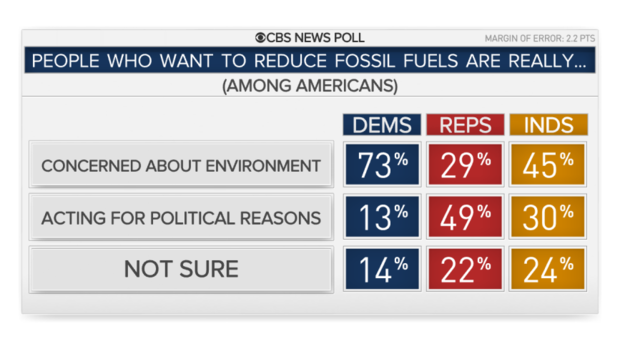
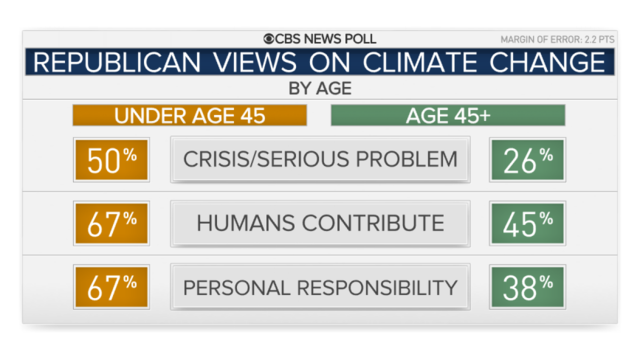
There are partisan divides on many views regarding climate change, including its cause and the level of urgency it requires.Large majorities of Democrats think humans contribute a lot to climate change and that people need to act now, while Republicans are more skeptical about the degree to which human activity contributes to it, and think the issue is less urgent.
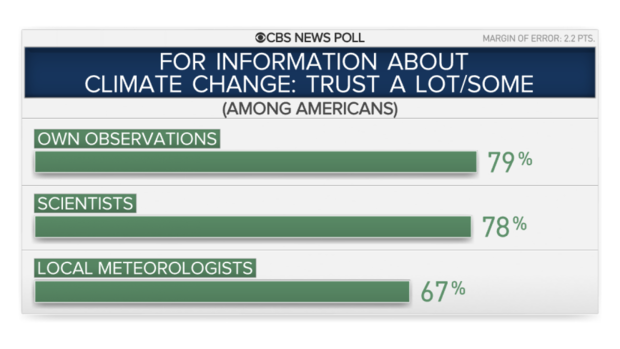
Also, Republicans have a lower level of trust in scientists when it comes to information about climate change than Democrats do.
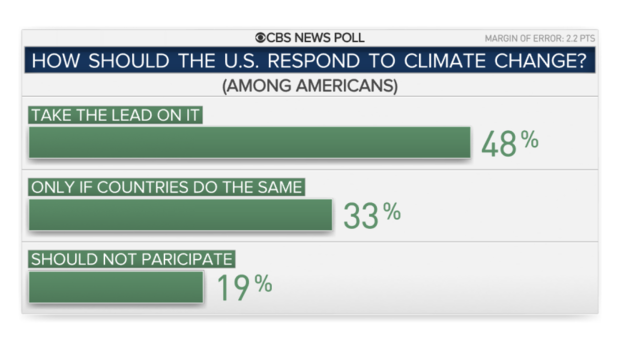
The U.S. and international cooperation
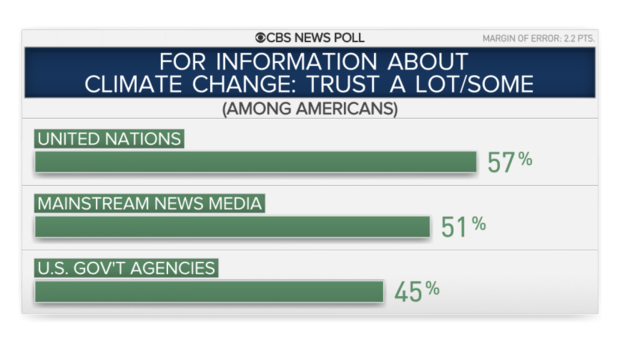
A recent United Nations report saying there was strong risk of an environmental crisis by 2040 if climate change wasn't addressed. This has increased the concern of some Americans. About a third say they are more concerned. Most Democrats are more concerned, while Republicans and independents are less impacted by the report. Overall, more Democrats say they have trust in climate information from the United Nations than Republicans or independents say they do.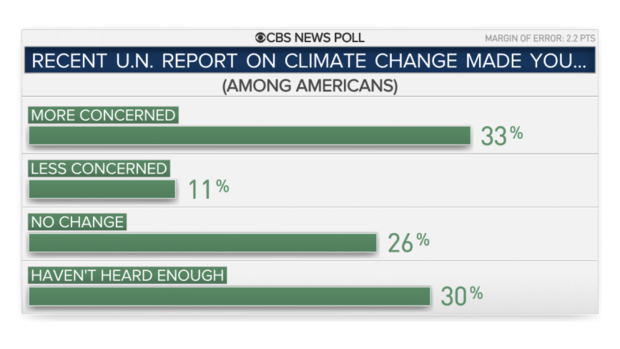
Renewable energy vs. fossil fuels
Most Americans (67%) think increasing production of renewable energy is more likely to create jobs in their local area than increasing production of fossil fuels. Most Republicans differ with the majority of Democrats and independents on this: 55% see more job prospects in increasing production of fossil fuels such as oil, coal, and gas.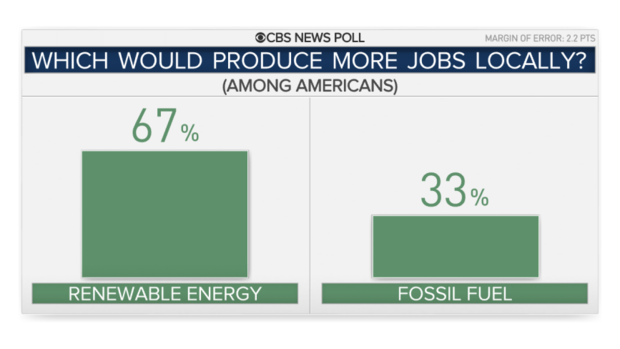
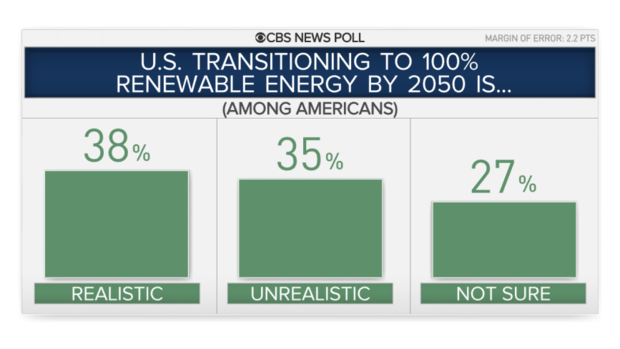
What can people do?
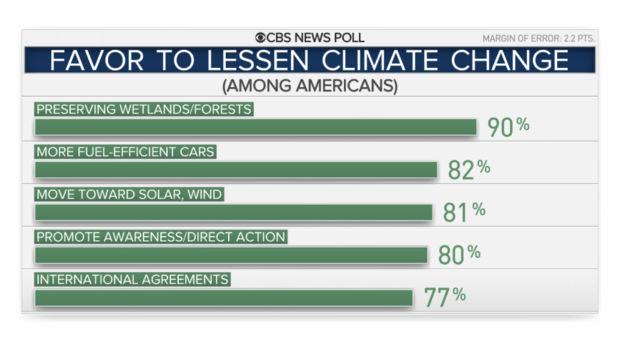
Most Americans think they have a personal responsibility to do something about climate change, even if it's in a small way. This is especially the case among those who think humans are a large contributor to climate change and those who think people need to act now.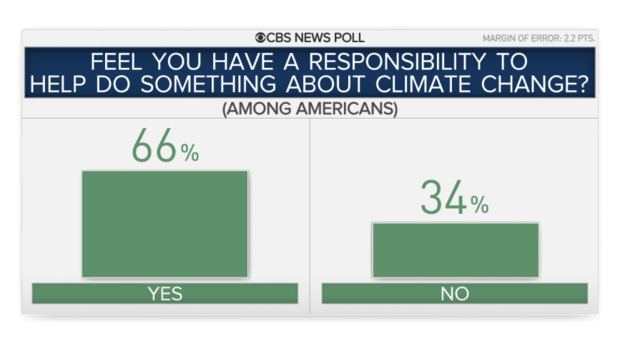
There are partisan divides here too. Democrats — who see climate change as a more pressing issue — are more likely than either Republicans or independents to feel they have a personal responsibility to help and to do something, even if it costs time and money.
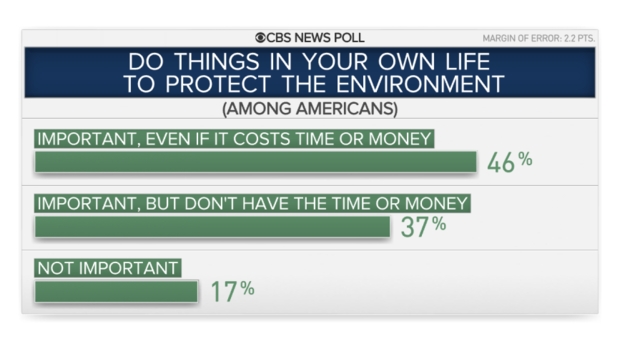
Most people say they are willing to implement all of these personal changes with the exception of giving up meat. Democrats and independents are more likely than Republicans to be willing to do many of these things.
This CBS News Poll is being released as part of Covering Climate Now, a collaboration of more than 250 news outlets around the world providing in-depth coverage of the climate story.
The CBS News survey is conducted by YouGov using a nationally representative sample of 2,143 U.S. residents interviewed between September 6 and 10, 2019. This sample was weighted according to gender, age, race, and education based on the American Community Survey, conducted by the U.S. Bureau of the Census, as well as 2016 presidential vote and registration status. The margin of error is 2.2 pts.
World

Oil prices spike after Trump warns U.S. "locked and loaded"

U.S. may tap into oil reserves after attacks on Saudi oil sites

U.S. and Afghan forces kill at least 38 Taliban fighters
Former U.N. ambassador slams Trump's "reckless" foreign policy

Violence erupts in Hong Kong as protestors defy police ban
U.S.
Politics
Oil prices spike after Trump warns U.S. "locked and loaded"
Schiff: Acting intel chief won't turn over whistleblower complaint
Andrew Yang offers to speak with "SNL" comedian over jokes

2020 Sunday Trail Markers: Joe Biden goes on a tour of the South
U.S. may tap into oil reserves after attacks on Saudi oil sites
Entertainment


Technology




Science
5 things to know about climate change
Most Americans say climate change should be addressed now — CBS News poll
Most Americans think climate change contributes to extreme weather events
CBS News poll looks at young Americans views' on climate change

Nature up close: How an insect is key to grizzly bears' survival
Health



MoneyWatch
Crime

Former NFL player accused of staging racially motivated burglary

The Hollywood Ripper: How "48 Hours" helped crack the case
Expert: Serial murderers' victim selection "often very specific"

Dispute between parents leads to shooting at peewee football game
















No comments:
Post a Comment